Summit Four, 2025
Of the City of Na-Koja-Abad.
“The city does not tell its past, but contains it like the lines of a hand.”
Italo Calvino, Invisible Cities
In Invisible Cities, Calvino transforms geography into language and territory into memory. Cities become constellations of dreams, fragments of lost worlds, and maps of desire. Inspired by this poetics of multiplicity, the Fifth edition of The Tehran Summit turns toward the concept of nationhood — not as a border, but as a fiction continually rewritten in the deserts of Na-Koja-Abad: that imaginal, luminous space “of nowhere” where metaphysics and materiality converge. Na-Koja-Abad, a term from al-Maqtūl’s Illuminationist philosophy, is not an abstract void, but a world of emergence, where forms are born from light and thought. In this sense, city of Na-Koja-Abad becomes a metaphor for our contemporary condition: a space emptied of certainty, yet full of latent potential. Here, nationhood is reimagined as a shifting mirage, visible, invisible, and perpetually transforming. This edition invites artists, thinkers, and scholars to map the interzones between myth and state, belonging and exile, visibility and disappearance. How might we inhabit multiple worlds at once? How can art perform the labor of speculating worlds that do not yet exist or that remain dormant within the cracks of dominant reality?
Of the City of Na-Koja-Abad unfolds as a collective act of world-building, a gathering across geographies, languages, and temporalities. It proposes a nation without walls, an unfinished cartography where voices resonate like distant cities across the sand: cities made of air, mirages, and light.
Speakers:
Night 1, May 18
Binna Choi:”How can I ever possibly love this country?”: Liberation as Space, Sovereignty as Practice
Binna Choi is a South Korean curator whose practice interconnect art, the curatorial, and the (sovereign) commons based on politics of decolonisation, indigenous practice and epistemology, and institutional change with unlearning, She directed Casco Art Institute: Working for the Commons in the Utrecht, the Netherlands over a decade where she curated projects such as Grand Domestic Revolution (2009–2012 with Maiko Tanaka and Yolande van der Heide), Site for Unlearning (Art Organization) (2014–2018 with Annette Krauss and the evolving Casco Team), Travelling Farm Museum of Forgotten Skills (2018–2022 with The Outsiders), next to a number of individual commissions and experimental collective works. Together with You Mi, she also maintains a study platform Unmapping Eurasia. Besides, Choi also served as a curator/co/artistic director for biennials such as the 2025 Hawai‘i Triennial, the 2022 Singapore Biennale, and the 2016 Gwangju Biennale. For the 2026 Venice Biennale, she curates the Korean Pavilion. In the context of pedagogy, she served as the faculty for Dutch Art Institute over a decade and the guest professor for the Gwangju Biennial International Curator Course 2025. Since 2024, Choi also works as the supervisor for Doosan Curator Workshop.
Night 2, May 19
Nicolas Bourriaud
GAPS, CRACKS, INTERSTICES. A TOPOLOGY OF THE ANTHROPOCENE
Nicolas Bourriaud, born in 1965, is a curator and writer. He founded and Codirected the Palais de Tokyo, Paris, (1999 -2006), was the founder advisor for the Victor Pinchuk Foundation in Kiev (2003-2007), professor at the IUAV in Venice (2006-2007), Gulbenkian Curator for Contemporary Art at Tate Britain in London (2007/ 2010). In 2010, he headed the studies department at the Ministry of culture in France, then became Director of the Ecole Nationale des Beaux-arts de Paris ( 2011 -2015). Between 2015 and 2021, he founded and directed MO.CO (Montpellier Contemporain). In 2022, he funded Radicants, a curatorial cooperative producing exhibitions worldwide. Translated worldwide, his essays on contemporary art include « Relational aesthetics » (1998) and « Inclusions. Aesthetics of the capitalocene » (2020). As an independant curator, he was part of the curatorial team of Aperto 1993 at the Venice Biennial, and organized many international exhibitions, from « Traffic » (Capc Bordeaux, 1996), « Estratos » (Murcia, Spain, 2008) or « Altermodern » (Tate Britain, 2009), « Wirikuta/ Mexican time slip » (Aguascalientes, Mexico, 2016), « Planet B. Climate change and the new sublime » (Venice, 2022), and more recently « 1+1. The Relational years » (MaXXI, Rome, 2025). He also curated several biennials, including Lyon (2005), Moscou (2005 and 2007, with Rosa Martinez, Daniel Birnbaum, Joseph Backstein, Hans-Ulrich Obrist and Iara Boubnova), « Monodrome » (Athens, 2011), « The Great Acceleration» (Taipei Biennial 2014), « Threads » (Kaunas Biennial, Lituania, 2015), « The 7th continent » (Istanbul biennial 2019), « Pansori. A soundscape of 21st century » (Gwangju Biennale, Korea, 2024).
Night 3, May 20
Slavs and Tatars
THE SERVICE INDUSTRY
Slavs and Tatars is an internationally renowned art collective devoted to an area East of the former Berlin Wall and West of the Great Wall of China known as Eurasia. Since its inception in 2006, the collective has shown a keen grasp of polemical issues in society, clearing new paths for contemporary discourse via a wholly idiosyncratic form of knowledge production: including popular culture, spiritual and esoteric traditions, oral histories, modern myths, as well as scholarly research. Their work has been the subject of solo exhibitions at institution across the globe, including the Vienna Secession; MoMA, New York; Salt, Istanbul; Albertinum Dresden, amongst others. The collective’s practice is based on three activities: exhibitions, publications, and lecture-performances. The collective has published more than twelve books to date, including most recently their first children’s book, Azbuka Strikes Back with Walther und Franz König, and their translations of the legendary Azeri political satire, Molla Nasreddin, in 2011. In 2020, Slavs and Tatars opened Pickle Bar, a slavic aperitivo bar-cum-project space a few doors down from their studio in the Moabit district of Berlin as well as a residency and mentorship program for young professionals from the region.
Night 4, May 21
Franco “Bifo” Berardi
How can we contribute to the termination of human History?
In 1975, Franco Berardi founded the magazine the magazine A/traverso and the first Italian free radio, named RADIO ALICE.
In 1994 he was the organizer of the international Congress CIBERNAUTI, funded by the University of Bologna, and dedicated to the emerging digital technologies. He published around twenty books, translated in many languages, including English, Italian, German, Turkish, Spanish, Korean, Norwegian, Swedish, Chinese and Russian.
Main publications: And Phenomenology of the end (Semiotexte, Los Angeles) 2014; Heroes, Mass murder and suicide (Verso, London), 2015; Futurability, The age of impotence and the horizon of possibility, Verso, London, 2017; The third Unconscious, Verso, London, 2022; Quit everything, The Repeater, 2024; Thinking Gaza, Semiotexte, 2026.
Night 5, May 22
Avery Gordon
already present in this instant inextricable: some thoughts on imagining worlds
Avery F. Gordon is a writer, educator and former radio producer. She was a Professor of Sociology at the University of California Santa Barbara for thirty years and is currently Visiting Professor at Birkbeck School of Law University of London since 2015. She is the author of The Hawthorn Archive: Letters from the Utopian Margins, Ghostly Matters: Haunting and the Sociological Imagination and many other works. She is currently writing a book about a soldier uprising in Yeosu Korea in 1948.
Nigh 6, May 23
Mi You
Vaster than Empire, Deeper than Multipolarity
Mi You is a curator and professor of Art and Economies at the University of Kassel / documenta Institut, where she leads research on the social, economic, and political conditions of art. She’s the author of the book Art in a Multipolar World (Hatje Cantz, 2024). As a curator, she works between ancient and futuristic imaginaries of societies and technologies, and the history, political theory, and philosophy of Eurasia. Her most recent exhibitions include the 13th Shanghai Biennale (2020–21), “Lonely Vectors” at the Singapore Art Museum (2022), “Clouds, Power and Ornament” at the Centre for Heritage, Arts and Textile (2023), and “Really? Art and Knowledge in Time of Crisis” at Framer Framed (2024). She serves as chair of the committee on Media Arts and Technology for the transnational NGO Common Action Forum and is a Berggruen Institute Europe fellow.
Nigh 7, May 24
Terry Smith
ART AGAINST CONTEMPORARY AUTHORITARIANISM
TERRY SMITH is Slade Professor of Fine Arts, University of Cambridge, 2025-2026; Professor in the Division of Philosophy, Art and Critical Thought, European Graduate School; Professor at Large, The Africa Institute, Global Studies University, Sharjah; and Faculty at Large, Curatorial Studies Program, School of Visual Arts, New York. He is author of What is Contemporary Art? (2009) Thinking Contemporary Curating (2012), Art to come: Histories of Contemporary Art (2109), Curating the Complex & The Open Strike (2021), and editor of Okwui Enwezor, Selected Writings (two vols. 2025).
What does it mean to imagine a pavilion beyond the nation-state? Beyond representation, diplomacy, and fixed borders?
This roundtable with Perpetuum Mobilε (PM) focuses on The Hyperstitional Pavilion of Iran, initiated on the occasion of the Venice Biennale 2026 as a speculative and collective space for rethinking presence, fiction, and political imagination. Facilitated by Perpetuum Mobilε (PM), the project proposes a pavilion not as a stable national image, but as an evolving process of becoming. This session was later added to the official program of the summit, as the curatorial team of the summit and PM felt an increasing sense of urgency around the questions, ideas, and reflections addressed during the discussion. In a moment marked by accelerating political and social transformations within the geohistorical context of Iran, we believed it was important to create a space for collective thought and critical dialogue. Perpetuum Mobile (PM) is an international NGO operating at the intersection of art, human rights, curatorial practice, and critical inquiry. Founded in 2007 by Ivor Stodolsky and Marita Muukkonen, PM functions as both a conduit and a catalyst for reimagining practical, historical, and theoretical paradigms across fields often separated by institutional and geopolitical boundaries. Featuring Ivor Stodolsky and Marita Muukkonen, directors of PM, alongside participating artist Bijan Moosavi, the conversation explores hyperstition, worldmaking, artistic agency, and the possibility of constructing other cosmographies for Iran amid conditions of fragmentation, exile, and crisis.
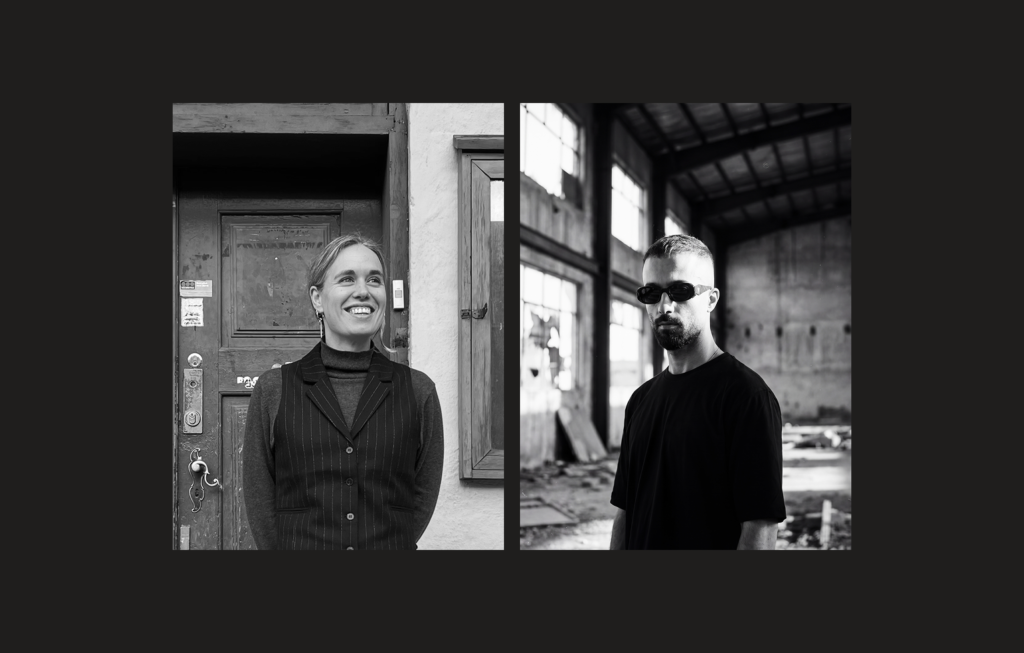
Based in Tehran, Erfan Ghiasi is a cultural saboteur and curator out of necessity who shatters realities to speculate new possibilities. Drawing on the concept of كُفْر (kufr), a term associated with heresy, the path of deviation, and the refusal of imposed truths, he develops multidisciplinary projects that investigate the intersections of geohistory, (counter-)narratives of control, worldmaking, and spatial politics through speculation and hyperstiton.
He further expanded his curatorial practice through participation in the #5 Autumn School of Curating in Cluj, Romania (2023); the #6 Curatorial Intensive South Asia (CISA), organized by Khoj International Artists’ Association and Goethe-Institut / Max Mueller Bhavan in New Delhi, India (2024); and the Gwangju Biennale International Curator Academy in Gwangju, South Korea (2025). Ghiasi is also the co-founder of The Tehran Summit and the founder of the Tehran Biennale, two parallel heretical initiatives dedicated to contemporary aesthetics, philosophy, and experimental forms of public gathering. Through these projects, Ghiasi explores new modalities of collective experience, para-institutional world-building, and cultural exchange within Iran and beyond.
Based between Oslo and Paris, Una Mathiesen Gjerde is a curator, film producer, and writer working at the intersection of visual arts and cinema. Her curatorial work is centered around questions related to precariousness, work ethics, economic models, and distribution systems, often departing from marxist theory and forms of collectivity, such as unionizing. She was appointed director of the exhibition space and artist union BO, The Association of Visual Artists Oslo (Oslo, Norway) in 2022. Aside from this, she has curated a number of exhibitions and public programs for collectors, independent spaces, and museums across Europe, such as Pragvoka Gallery (Praha, Czech Republic), Podium (Oslo, Norway), Encooore (Biarritz, France), The Botanical Garden of the University of Oslo Natural History Museum (Oslo, Norway), The Institute for Post-Natural Studies (Madrid, Spain), Fundación Sandretto Re Rebaudengo (Madrid, Spain), and Konstfack – University of Arts, Crafts and Design (Stockholm, Sweden). Since 2024, Gjerde has been the co-curator of the philosophical and art theory-based lecture symposium the Tehran Summit, that takes place annually in Tehran, Oslo, and beyond. She is also the founder and CEO of the cinema production company Amfitrite Produksjon AS, dedicated to the production of cinematic works fueled by experimentation and artistic drive.